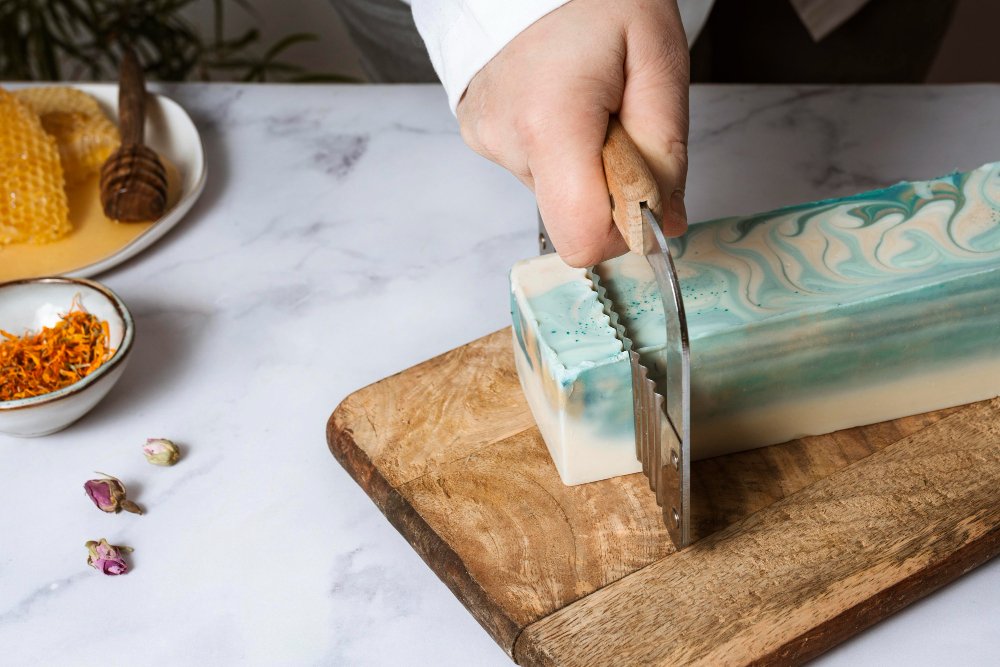
By the year 2026, the number of individuals interested in natural products and eco-friendly living is increasing. Saponizacion is one of the aspects that is discussed in this movement. This might have taken the form of a complex scientific word yet the simple fact is that saponizacion is the process of transforming oils and fats into soap. This response has been in effect centuries and is the basis of the contemporary soap making.
By knowing about saponizacion, the person will be able to understand the way natural soaps are made and why they tend to be safer and healthier to the skin and the environment. You may be interested in chemistry, skincare, or environmentally friendly living, but the idea of saponificacion may be interesting and useful to learn.
What Is Saponizacion?
Saponizacion is a chemical reaction which takes place when fats or oils mix with a strong base which is either sodium hydroxide or potassium hydroxide. The fats are broken down and when this reaction occurs they form soap and glycerin.
To put it in plain words, saponificacion is the conversion of natural oils into cleansing products. It is this process that allows such oils as olive oil, coconut oil, and palm oil to be used in order to make soap bars. Saponificacion science can be viewed as technical, yet the principle is quite simple. The alkaline substance is reacted with oil and water to give soap.
Saponizacion is used nowadays in small businesses and by handmade soaps to create natural and skin-friendly soaps.
The History of Saponizacion
Saponizacion is not a novel idea. As history tells us, the knowledge of the existence of soap-like substances was not centuries old when ancient people became aware of their existence. The first types of saponizacion must have occurred by accident when animal fats combined with ashes and water during cooking or cleaning operations.
With time, individuals started realizing that this reaction can be intentional. Various techniques concerning saponizacion were tried by ancient Romans, Babylonians, and Egyptians. Their findings later saw the introduction of more advanced methods of producing soaps.
By the modern, scientists had completely comprehensively realized the chemistry of saponizacion and were able to make soap production more regular and managed.
The Workings of the Saponizacion Process
The process of the saponizacion starts with oils or fats. These are combined with an alkaline solution commonly referred to as lye. The reaction starts when the mixture is mixed and exposed to heat.
As part of the saponificacion the fat molecules are broken down to fatty acids and glycerol. The resultant fatty acids are then mixed with the alkaline substance to make soap molecules. Glycerin is present in the mixture in the meantime and offers moisturizing effects.
That is why soaps which were produced by appropriate saponificacion are usually tender and nutritious to the skin. Most commercial soaps de-glycerinate, yet handmade soaps tend to retain it as a natural product of saponificacion.
The entire response is time consuming. Soaps typically require several weeks to dry after the process of initial mixing to allow the saponificacion process to complete and to make the soap safe and sufficiently hard to be used.
The importance of Saponizacion in Natural Soap
Natural skincare is an extremely trendy product in recent years. One is the fact that saponificacion process gives soap makers an opportunity to manage ingredients meticulously. They have the option of choosing certain oils which have various skin benefits.
Coconut oil can be an example: it is possible to produce a powerful cleansing effect with the help of saponizacion, whereas olive oil can be used to produce a gentle and non-drying soap. Shea butter, as well as other vegetable oils is also subject to saponizacion, and imparts additional nourishment.
Due to this fact, saponizacion enables soap makers to produce soap products that target various kinds of skin. Individuals who have sensitive skin would tend to use soaps that have been prepared using the traditional saponificacion method in that they have fewer synthetic additives.
Saponizacion and Sustainability in 2026
In a way that environmental awareness keeps increasing in 2026, saponizacion is becoming a concern in ecologically friendly societies. Biodegradable ingredients and little packaging are often used in handmade soaps made using the saponificacion process.
This makes saponizacion a good choice to those who seek to impact the environment minimal. Natural soaps that are created using a traditional saponificacion method and whose oils are made of vegetable oils tend to be less harmful to waterways and ecosystems.
Saponizacion is also being adopted by small businesses worldwide as the sustainable product trend. A large number of brands emphasize the ancient ways of making soap and the natural resources in their saponificacion techniques.
The Future of Saponizacion
Although saponizacion is an old method, it is very topical nowadays. The innovation in the science of cosmetics is contributing towards increasing the efficiency and safety of saponificacion and it does not alter the natural properties that people cherish.
Other skincare companies might also integrate the use of modern technology with conventional saponificacion in the next years. This will help produce quality and effective soaps which are also environmental friendly.
With the growing popularity of the natural living, saponificacion will most probably be one of the main components of the world of the soap making.
Conclusion
Saponizacion is the ideal case of how simple chemistry can form something that is vital in the daily life. This process is achieved through mixing oils with an alkaline agent to produce natural items into convenient and mild cleaning agents.
saponificacion has been an important ingredient in the production of soaps since the times of ancient civilization up to the present eco-friendly brands. Knowing how saponificacion is, makes people enjoy the art form of handmade soaps and the science that enables it to take place.
In the years ahead, particularly in 2026, the need to incorporate saponificacion in natural skincare and green products is likely to increase.