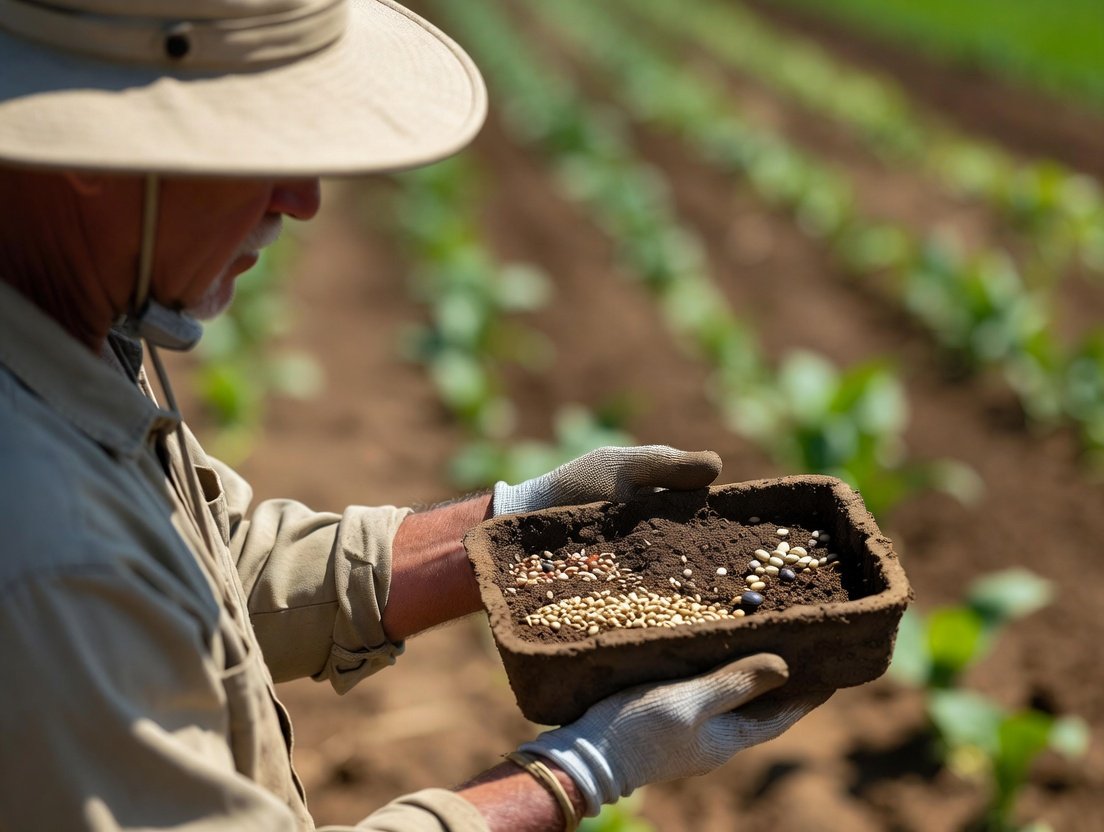
Seedsmanship is an ancient art in the constantly evolving nature and direction of agriculture, and thus it is evolving to meet the new challenges. Farmers worldwide are reinventing the importance of a sound seed-manship in order to make 2026 count, in 2026. Planting seeds is no longer about it, but it is about creating a partnership with the land and the new innovations. In this article, the author investigates the nature of seedsmanship in the present day, its significance, and how it is changing to fit the needs of the warmer, less predictable climate.
Knowing the Essentials of Seedsmanship
Seedsmanship refers to the art and science of selecting, managing and recommending seeds to bring the most desired results to the crops. Fundamentally, seedsmanship entails profound expertise regarding seed varieties, soil type and weather cycles. An actual seedsmith does not solely sell seeds, but he/she laments farmers through all the processes, which include selecting strong hybrids to the most appropriate methods of planting. Seedsmanship has gained importance in 2026 even more when growers have to consult experts due to unexpected weather patterns. Good seedsmanship refers to the understanding of interaction between seeds and their environment, which results in healthier plants with greater yields without any needless dangers.
Effective seedsmanship begins with the assessment of the specifics of the farm. An example is a seedsman who will test the health of the soil and prescribe the type of seed that will survive in dry soil. Such quality of seeds manship is a guarantee that all the seeds planted will have a chance at success and potential failure will be transformed into success. Farmers practicing seeds manship also tend to record less crop failures and more regular outputs, and it is an element of sustainable farming.
Seedsmanship and Sustainable Agriculture
Seedsmanship will arguably contribute towards sustainability at the farm. Seeds manship assists in eliminating the overuse of water or chemicals by targeting varieties that are climate savvy. As the world becomes hotter in 2026, experts in seeds manship are focusing on seeds that are genetically modified to withstand drought and survive pests. This means of seeds manship preservation does not only ensure that the environment is secure but enhances the profitability of the farm. Consider a field where the seeds used are carefully selected to make the most out of the waste space- that is the force of seeds manship in modern times.
On top of selection, seeds manship entails continuous assistance during the growing season. A seed man committed to the farm checks its crop development and modifies measures where necessary, a position that is the actual essence of seeds manship. This practical engagement builds confidence as well as long term relationships between the farmers and their advisors. Seedsmanship is evolving to accommodate more growers who are embracing the practice of regenerative agriculture, where advice on cover crops and soil regeneration is provided to ensure that the land is not lost to soil erosion.
Future Trends in Seedsmanship by 2026
The technology and data-driven insights are changing the face of seedsmanship by looking at 2026. Seedsmanship is being made more efficient through precision-farming gadgets, such as AI-based applications, which offer real-time information on the performance of seed. These innovations are now allowing farmers to perfect their seedmanship skills, including variable-rate seeding which adjusts seed density to the quality of the soil. This seedsmanship that is technologically enhanced, makes it more predictable and less artificial and will aid crops to be resistant to harsh weather conditions.
The other tendency in seedsmanship is the emergence of biotech developments. Disease-resistant gene-edited seeds are now a commonplace and those in the field of seedsmanship are on the forefront to suggest these changes. Seedsmanship in areas with water scarcity is dedicated to varieties with reduced irrigation, which is susceptible to supporting global sustainability objectives. Through a combination of these tendencies, seedsmanship is transforming into a progressive discipline which is guiding the future of farms.
Advantages and Solutions to Pursuing Seedsmanship
Strong seedsmanship has its advantages as it has resulted in better yields, cost-saving and environmental security. Farmers with an emphasis on seeds manship tend to have their operations become more resistant to the market pressures. An example is, with the help of skilled seeds manship, a grower could convert to the high-performance corn hybrids that provide a higher yield even during hard years. This is a viable use of seeds manship that transforms obstacles into opportunities.
To become a seedsmith initially, it is advisable to consult the local experts who are knowledgeable of the conditions in the area. The self-directed study and practice of seeds manship is possible through experimentation on small plots and the following observation of outcomes. Farm networks and Internet forums allow one to acquire the techniques of advanced seedsmanship in 2026. Also, good seeds manship involves cooperation, collaborating with advisors to help find solutions that fit your needs in your farm.
Viewing into the Future: The Future of Seedsmanship
By the end of it all, we can say that seeds manship will be needed in 2026 and even later. In a climatic pressure filled world, mastering seeds manship will help farmers survive in a world full of uncertainty. Seeds manship is the process of bridging the gap between seed and harvest whether by use of traditional wisdom or the latest tools. Investing in seeds manship, growers get not only to guarantee their livelihoods but also to make the world a healthier place. And when you are in farming, it is time to perfect your seeds manship–you will be glad of it in your fields.